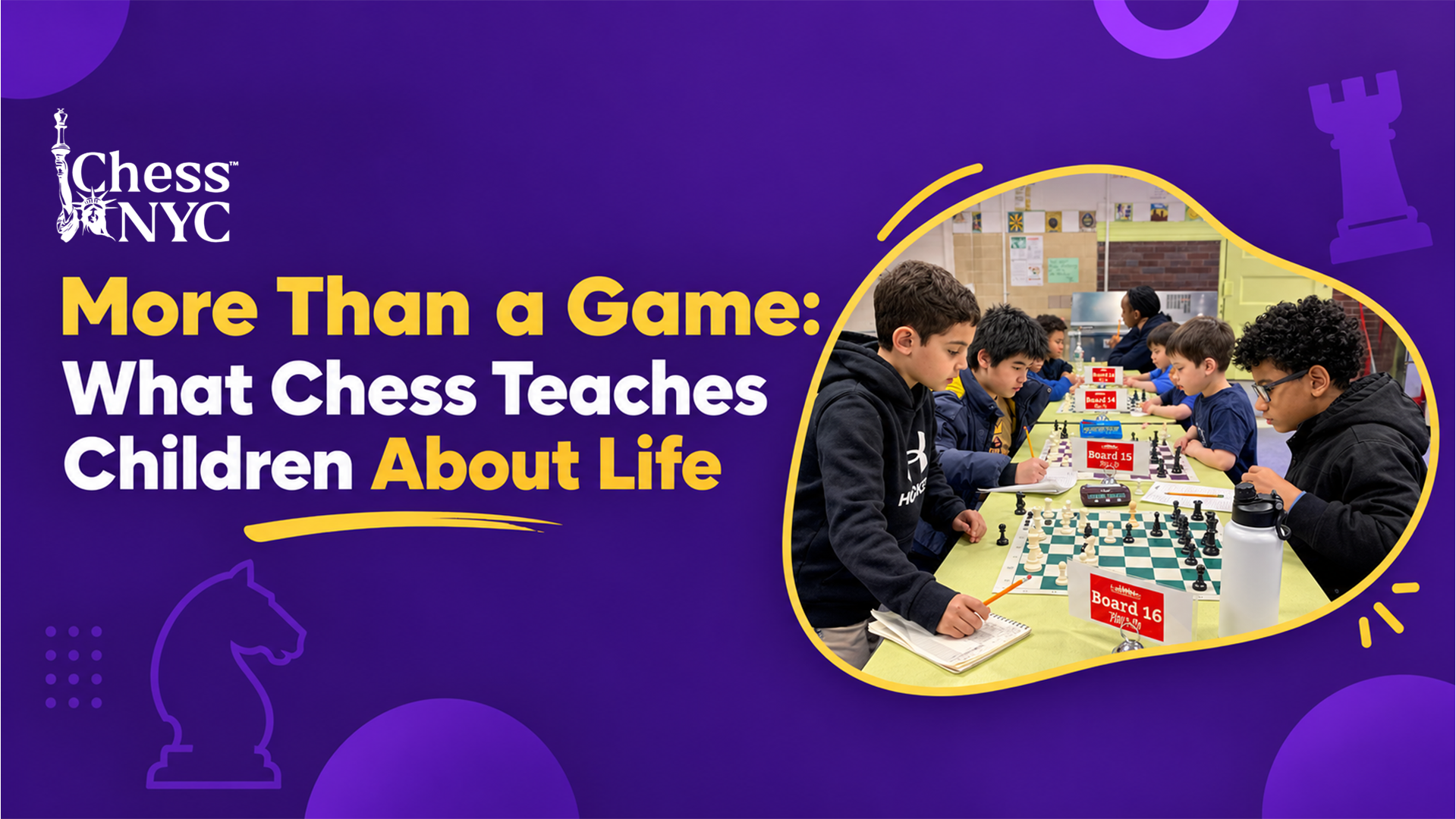
Walk into any chess class in New York City on a weekday afternoon, and you'll see something surprising. Rows of kids, some as young as five, hunched over checkered boards, completely silent, completely focused. No phones. No fidgeting. Just thirty-two pieces and a problem to solve.
Parents often sign their kids up for chess lessons NYC wide programs offer, expecting a fun after-school activity. What they don't always expect is how much the game quietly rewires the way a child thinks, feels, and handles the world outside the board.
Chess is not just a game. It's a 64-square classroom where children learn patience before they learn algebra, humility before they learn to drive, and strategy before they even understand the word. This blog dives deep into the real, lasting life lessons from chess — the kind that stick with kids long after they've packed away their pieces.
Why Chess Is More Than a Hobby
Every parent wants their child to grow up resilient, thoughtful, and confident. The tricky part is that these traits aren't taught through lectures. They're built through experience — through losing a game you thought you had won, through waiting patiently for the right moment to strike, through sitting with a problem until it finally clicks.
That's exactly what makes chess different from most extracurriculars. A dance class builds coordination. A coding class builds logic. But chess builds character. It puts a child in a small, safe, contained battle where every decision has a consequence, and every consequence is a lesson.
This is why so many schools and community centers across the city now offer chess classes NYC families can rely on — not just to teach the rules of the game, but to teach the rules of life.
The Core Life Lessons Chess Teaches Children
1. Patience Is a Superpower
In a world of instant videos and one-tap games, chess forces children to slow down. There's no shortcut to a good move. You have to look, think, wait, and only then act.
Kids who play chess regularly begin to understand that rushing rarely helps. The best move is rarely the fastest one. This is one of the most valuable pieces of chess life skills a child can carry into schoolwork, sports, and even friendships, where patience often separates a good decision from a regretful one.
2. Every Action Has a Consequence
Move a pawn carelessly, and three moves later, your queen might be trapped. Chess is brutally honest about cause and effect. There are no participation trophies on the chessboard — only outcomes.
This cause-and-effect thinking translates directly into real life. Children begin to understand that choices matter, whether it's finishing homework on time or being kind to a classmate. It's one of the clearest examples of the educational benefits of chess that goes beyond textbooks.
3. Losing Gracefully Builds Resilience
No child wins every game. In fact, most children lose far more games than they win when they're starting out. And that's exactly the point.
Chess teaches kids how to lose without falling apart, how to shake hands, reset the board, and try again. This single skill — bouncing back from failure — is one of the most important lessons kids learn from chess, and one that many adults are still trying to master.
4. Thinking Before Acting
Impulsivity is natural in childhood. Chess gently corrects it. A child who has learned to pause and consider "if I do this, what will happen next?" is a child who is less likely to react without thinking in a classroom argument or a playground disagreement.
This quiet mental habit — think first, act second — is one of the most practical examples of chess and personal growth working together in a young mind.
5. Respect for Rules and Opponents
Chess has structure. Pieces move in specific ways, turns are taken one at a time, and there's no room for cheating your way to a win. Children learn to respect boundaries — both the rules of the game and the person sitting across the board.
This respect naturally extends outward: respect for teachers, for teammates, for people who think differently. It's a subtle but powerful piece of character development for children that many parents don't expect chess to deliver.
6. Planning Ahead
Good chess players don't just react to what's happening on the board right now — they think three, five, even ten moves ahead. This kind of forward planning is a skill most adults struggle with, yet children as young as seven start developing it through consistent play.
Whether it's planning a school project or managing time before an exam, this forward-thinking mindset is one of the most transferable benefits of chess for kids you'll notice as they grow.
7. Focus in a Distracted World
A single chess game can last anywhere from ten minutes to over an hour. During that time, a child's brain is fully engaged — no scrolling, no multitasking, just deep focus on one problem.
In an age where attention spans are shrinking, this ability to sit with a single task and see it through is becoming rare and valuable. Many parents enrolling their kids in NYC chess lessons specifically mention this improved focus as one of the biggest changes they notice at home and in school.
8. Confidence Through Competence
There's a unique kind of confidence that comes from genuinely understanding something — not being told you're smart, but knowing you solved a hard problem yourself. Chess gives children that exact experience, move after move, game after game.
This isn't hollow confidence. It's earned. And it tends to show up in how kids carry themselves in other areas of life, from raising their hand in class to trying out for a team.
9. Handling Pressure Calmly
A ticking clock, an opponent staring you down, a position that suddenly looks shaky — chess puts children in small, manageable pressure situations regularly. Over time, they learn to stay calm instead of panicking.
This is a real-world skill. Tests, presentations, and even social situations all come with pressure, and children who've practiced staying composed on a chessboard often handle these moments with a little more calm.
10. Empathy and Perspective-Taking
To play chess well, you have to think like your opponent. What are they planning? What move would they make next? This constant mental exercise of stepping into someone else's shoes is, quietly, a lesson in empathy.
It's a small but meaningful part of how chess builds chess life skills that go far beyond strategy — teaching kids to consider other people's perspectives, not just their own.
How Chess in NYC Is Helping Kids Build These Skills
New York City has become something of a hub for youth chess. From public school programs to dedicated academies, chess NYC offerings have grown rapidly over the past decade, and it's not hard to see why parents are drawn to them.
Structured chess classes NYC programs give children more than just game rules — they offer mentorship from patient instructors, exposure to tournaments, and a community of peers who enjoy thinking as much as they enjoy playing. Group classes teach kids to win and lose in front of others, which builds social resilience alongside strategic skill.
Meanwhile, private chess lessons NYC based instructors provide personalized coaching, moving at a pace suited to the child's learning style — useful for both beginners who need extra encouragement and advanced young players preparing for competitive tournaments.
Whether a family chooses group sessions or one-on-one coaching, the underlying goal is the same: using the game as a tool to shape thoughtful, resilient, focused young minds.
What Parents Notice at Home
Parents who enroll their children in NYC chess lessons often report changes that go beyond the chessboard:
- Kids pause before reacting emotionally
- Homework gets done with more patience and less frustration
- Losing a game (of any kind) doesn't trigger a meltdown like it used to
- Children start planning ahead — packing their bag the night before, for example
- Improved concentration during reading or classwork
These aren't guaranteed outcomes, and every child develops differently. But the pattern is common enough that many educators consider chess one of the most effective informal tools for character development for children.
Is Chess Right for Every Child?
Not every child will fall in love with chess overnight, and that's completely normal. Some kids take a few sessions to warm up to the structure, while others are hooked from their very first game. The important thing is exposure — giving a child the chance to experience the challenge, the small wins, and yes, the losses too.
Even children who don't go on to become passionate competitive players still absorb many of the underlying chess life skills simply through regular practice. The goal isn't to raise a grandmaster; it's to raise a thoughtful, resilient human being — and chess happens to be an excellent, low-pressure way to do that.
Getting Started: Tips for Parents
If you're considering signing your child up for lessons, here are a few practical pointers:
- Start with fun, not competition. Early lessons should feel like play, not pressure.
- Choose age-appropriate group sizes. Younger kids often benefit from smaller class sizes with more individual attention.
- Be patient with the learning curve. Understanding openings, tactics, and endgames takes time.
- Celebrate effort over outcome. Praise the thinking process, not just the wins.
- Look for instructors who explain the "why." Good coaches don't just teach moves, they explain reasoning — which is where the real life lessons come from.
Many well-established chess classes NYC programs build their curriculum around exactly this philosophy: making the game accessible, encouraging, and rich with subtle life lessons at every level.
Conclusion
Chess looks like a simple game of black and white squares, but underneath that simplicity lies a quiet curriculum in patience, resilience, empathy, and thoughtful decision-making. Every checkmate and every hard-fought loss teaches a child something that no textbook can — how to think clearly, act wisely, and handle both victory and defeat with grace.
For families exploring chess lessons NYC wide, or searching for the right chess NYC program to enroll their child in, it's worth remembering that the real prize isn't just becoming a better player. It's becoming a better thinker, a calmer problem-solver, and a more resilient young person — skills that carry far beyond the chessboard and into every corner of life.
Frequently Asked Questions (FAQs)
1. At what age should a child start learning chess?
Most children can start learning the basics of chess between ages 5 and 7, though even younger kids can begin with simplified versions of the game. The key is introducing it in a fun, low-pressure way rather than focusing on competitive play too early.
2. What are the main benefits of chess for kids?
The core benefits of chess for kids include improved patience, better focus, stronger problem-solving skills, resilience after losses, and the ability to think ahead and plan strategically — skills that carry over into academics and everyday decision-making.
3. Does chess actually improve academic performance?
Many studies and educators suggest a strong link between chess and improved concentration, memory, and logical reasoning, all of which support better academic performance, particularly in subjects like math and reading comprehension.
4. How often should a child practice chess to see benefits?
Consistency matters more than intensity. Even one structured class a week, combined with occasional casual practice at home, is enough for most children to start developing the life skills chess offers.
5. What should parents look for in chess lessons NYC programs?
Look for instructors who focus on explaining reasoning behind moves, not just memorized openings. A good program balances fun with structure and encourages kids to reflect on both their wins and their losses.
6. Is one-on-one coaching better than group chess classes NYC options?
Both have value. Group classes build social skills and healthy competition, while private lessons offer personalized pacing. Many families choose a mix of both depending on the child's personality and goals.
7. Can chess help with a child's emotional development?
Yes. Chess naturally exposes children to disappointment, pressure, and delayed gratification in a safe environment, helping them build emotional regulation and resilience over time — key aspects of character development for children.
8. Do kids need to be naturally good at math to enjoy chess?
Not at all. Chess is more about pattern recognition, memory, and strategic thinking than raw math ability. Children with all kinds of academic strengths can enjoy and benefit from the game.
9. How is chess different from other after-school activities in building life skills?
Unlike many activities that focus on a single skill (like coordination or memorization), chess uniquely combines patience, consequence-based thinking, focus, and social skills like empathy and sportsmanship, all within one game.
10. Where can families find quality NYC chess lessons for beginners?
Many community centers, schools, and dedicated chess academies across the city offer beginner-friendly NYC chess lessons Near me, often with trial classes available so families can find the right fit for their child's age and personality.