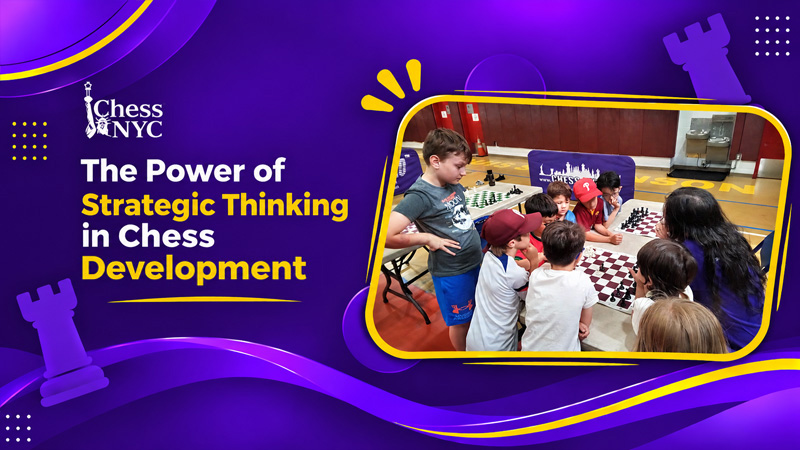
Chess is much more than moving pieces across a board. It is a game of patience, planning, decision-making, and understanding how each move influences the overall position. While beginners often focus on learning individual moves and basic rules, becoming a stronger player requires something deeper: strategic thinking in chess.
Strategic thinking helps players look beyond immediate moves and consider the bigger picture. It involves understanding the position, identifying strengths and weaknesses, planning, and making decisions that support long-term goals. Whether someone is learning chess for the first time or competing in tournaments, developing a strong chess strategy can significantly improve their performance.
With regular practice and the right guidance, players can improve their chess skills, develop better judgment, and become more confident in their decisions. Understanding the power of strategy is an important step toward long-term chess development.
What Is Strategic Thinking in Chess?
Strategic thinking in chess is the ability to understand the overall position and create a plan based on the board's opportunities and challenges. Instead of making moves without a clear purpose, strategic players consider how each move contributes to their long-term objectives.
For example, a player might focus on controlling the center, improving piece activity, protecting the king, or creating weaknesses in the opponent's position. These decisions may not produce an immediate advantage, but they can create opportunities later in the game.
Chess strategy focuses on questions such as:
- Which squares should I control?
- Which pieces need better positions?
- What are my opponent's weaknesses?
- Should I attack or improve my position?
- How can I prepare for my opponent's next move?
Learning to answer these questions helps players develop a more organized approach to the game.
Why Is Strategic Thinking Important for Chess Development?
Strategic thinking plays a major role in improving overall chess performance. It teaches players to understand the purpose behind their moves rather than relying entirely on memorized openings or individual tactics.
Here are some important ways strategic thinking supports chess development.
1. Improves Decision-Making Skills
Every chess game involves making decisions under pressure. Players must evaluate different possibilities and choose the move that offers the greatest benefit.
Strategic thinking encourages players to consider the consequences of their decisions before moving a piece. Rather than choosing the first move that looks attractive, they learn to compare alternatives and identify potential risks.
For example, moving a knight toward an attacking position might appear useful. However, a strategic player will also consider whether that move leaves another piece undefended.
This habit improves decision-making in both chess and everyday situations.
2. Develops Long-Term Planning
One of the most important chess skills is thinking several moves ahead. Although tactical combinations can create immediate opportunities, strategic planning helps players prepare for situations that may develop much later.
Long-term chess planning involves identifying a goal and choosing a sequence of moves that gradually supports it.
A player might decide to:
- Control an important open file.
- Place a rook on an active square.
- Improve a poorly positioned bishop.
- Create pressure against an isolated pawn.
- Prepare a kingside or queenside attack.
These plans help players maintain direction throughout the game.
3. Strengthens Positional Understanding
Positional understanding is essential to chess strategy. It involves recognizing the value of piece placement, pawn structure, king safety, and control of important squares.
For example, a knight positioned in the center may control several important squares and restrict the opponent's movement. Similarly, a bishop with an open diagonal can become a powerful attacking piece.
Players who understand positional concepts can spot advantages that aren't immediately visible.
Developing this skill helps players make stronger decisions even when no obvious tactical opportunities appear.
4. Encourages Patience and Discipline
Chess rewards players who know when to act and when to wait. Attacking without preparation or moving pieces without a clear purpose can weaken an otherwise strong position.
Strategic thinking teaches players that not every position requires an immediate attack.
Sometimes, the best move is to improve a piece, strengthen the pawn structure, or prevent the opponent from creating threats.
This develops patience and discipline, helping players avoid unnecessary risks and maintain control of the game.
5. Helps Players Recognize Opponent's Weaknesses
A strong chess player does not focus only on their own plans. They also observe their opponent's position and search for weaknesses.
Common weaknesses include:
- Isolated or doubled pawns.
- Weak king protection.
- Poorly placed pieces.
- Unprotected squares.
- Restricted piece movement.
- Vulnerable files and diagonals.
Recognizing these weaknesses allows players to build plans that create pressure over time.
This ability is particularly useful in longer games, where positional advantages can gradually become decisive.
The Relationship Between Chess Strategy and Chess Tactics
Chess strategy and chess tactics are closely connected, but they serve different purposes.
Chess strategy focuses on long-term plans and positional improvements. It helps players decide what they want to achieve in a particular position.
Chess tactics involve short-term combinations that can lead to immediate gains, such as winning material, delivering checkmate, or creating a decisive threat.
Some common tactical ideas include:
- Forks
- Pins
- Skewers
- Discovered attacks
- Double attacks
- Deflections
- Back-rank checkmates
For example, a player might strategically place a knight on a central square to increase its activity. Later, that knight may create a fork that attacks the opponent's king and rook simultaneously.
This shows how strategic planning can create opportunities for tactical combinations.
Understanding both concepts is essential for developing complete chess skills. Strategy helps players create favorable positions, while tactics help them take advantage of opportunities.
Essential Strategic Concepts Every Chess Player Should Learn
To become more confident in chess, players should understand several fundamental strategic concepts.
1. Control the Center
The center of the chessboard is one of the most important areas because pieces placed there generally have greater influence over the board.
Controlling central squares allows players to move their pieces more freely and restrict their opponent's options.
Players often use their pawns and minor pieces to establish central control during the opening.
2. Develop Pieces Efficiently
Piece development means moving knights, bishops, and other pieces toward useful positions where they can influence the game.
Good development helps players coordinate their pieces and prepare for future attacks.
Moving the same piece repeatedly without a clear reason or bringing the queen out too early can waste valuable time.
A well-developed position creates more opportunities for strategic and tactical play.
3. Understand Pawn Structures
Pawns play an important role in determining the character of a chess position.
Their arrangement influences available squares, open files, attacking opportunities, and defensive weaknesses.
Players should learn to recognize different pawn structures, including:
- Isolated pawns.
- Doubled pawns.
- Passed pawns.
- Backward pawns.
- Connected pawns.
- Pawn chains.
Understanding these structures helps players create plans that suit the position.
4. Prioritize King Safety
King safety is a fundamental part of chess planning. Even a player with a material advantage can lose quickly if their king becomes exposed.
Castling at the right time, maintaining a strong pawn shield, and avoiding unnecessary weaknesses around the king are important strategic decisions.
Players should always consider their opponent's attacking possibilities before making moves that weaken their king's position.
5. Improve Piece Coordination
Strong chess positions depend on how well the pieces work together.
A rook, bishop, and knight may each be powerful individually, but their combined strength increases when they support one another.
Piece coordination lets players build attacks, defend key squares, and create threats that are hard for opponents to handle.
How to Develop Strategic Thinking in Chess
Players don't master strategic thinking overnight. It develops gradually through consistent practice, careful observation, and learning from previous games.
Here are some practical ways to improve this important chess skill.
1. Study Classic Chess Games
Studying games played by experienced chess players is an effective way to understand strategic ideas.
Instead of looking only at the final result, observe why certain moves were played and how they shaped the overall position.
Pay attention to:
- How players control the center.
- Why do they exchange particular pieces?
- How they create weaknesses.
- When they choose to attack.
- How they convert positional advantages into victories.
Analyzing classic games can help players recognize patterns and apply similar ideas in their own games.
2. Analyze Your Own Games
Reviewing previous games is one of the most valuable methods of chess improvement.
After completing a game, go through the important positions and identify the decisions that influenced the result.
Ask yourself:
- Did I follow a clear plan?
- Did I overlook an opponent's threat?
- Were my pieces placed effectively?
- Did I create unnecessary weaknesses?
- Could I have chosen a better strategic approach?
Learning from mistakes helps players avoid repeating them and improves their understanding of different positions.
3. Practice Positional Exercises
Many players spend considerable time solving tactical puzzles, but positional exercises are equally important.
These exercises encourage players to identify the best square for a piece, evaluate pawn structures, and recognize long-term opportunities.
For example, you might study a position and decide whether improving a knight, exchanging bishops, or advancing a pawn would be the most effective plan.
Regular positional practice develops deeper strategic understanding.
4. Play Longer Time-Control Games
Rapid games and blitz chess are enjoyable, but they often encourage quick decisions.
Longer games give players more time to evaluate positions, compare possible moves, and think about their overall plans.
This creates opportunities to practice strategic thinking without feeling rushed.
Players can gradually develop the habit of considering both their own intentions and their opponent's possible responses.
5. Learn from Experienced Chess Coaches
Learning chess with an experienced coach can make the improvement process more structured and effective.
A coach can identify weaknesses, explain complex positions, and introduce strategic concepts based on a player's current level.
Personalized guidance also helps players understand why a particular move is strong instead of simply memorizing the correct answer.
For beginners, structured chess lessons can establish strong foundations. Intermediate and advanced players can benefit from deeper discussions about positional play, opening preparation, and tournament strategy.
How Strategic Thinking Benefits Children and Adults
Strategic thinking in chess offers valuable learning opportunities for people of different ages.
Benefits for Children
Chess encourages children to think carefully before making decisions. It introduces them to planning, patience, and logical reasoning in an enjoyable environment.
Some important benefits include:
- Critical Thinking: Children learn to evaluate situations and consider different possibilities.
- Concentration: Following a game encourages attention and focus.
- Problem-Solving: Players practice finding solutions to challenging positions.
- Confidence: Learning new strategies and achieving small improvements can build self-confidence.
- Decision-Making: Children understand that every action can have consequences.
These abilities can support learning and personal development beyond the chessboard.
Benefits for Adults
Adults can also benefit from developing strategic thinking through chess.
The game provides regular opportunities to practice analytical thinking, patience, and decision-making.
Adults can use chess to challenge themselves, explore new ideas, and enjoy a mentally engaging activity.
Whether learning as a beginner or returning to chess after several years, developing strategic skills can make the experience more rewarding.
Common Strategic Mistakes Chess Players Should Avoid
Even experienced players sometimes make strategic mistakes that weaken their positions. Understanding these mistakes can help players improve their approach.
1. Moving Without a Plan
Making random moves can result in poorly coordinated pieces. Before moving, consider what you want to achieve.
2. Ignoring Opponent's Threats
Focusing entirely on your own strategy can make you overlook important threats. Always evaluate what your opponent is planning.
3. Attacking Too Early
Launching an attack without sufficient development or support can create weaknesses. Prepare your position before committing to an aggressive plan.
4. Exchanging Pieces Without Understanding the Position
Not every exchange is beneficial. Consider whether exchanging a particular piece improves your position or helps your opponent.
5. Ignoring Pawn Structure
Unnecessary pawn moves can create long-term weaknesses. Think carefully before advancing pawns, as they cannot move backwards.
Recognizing these mistakes helps players become more thoughtful and consistent.
The Role of Consistent Practice in Chess Development
Strategic thinking improves through regular and purposeful practice. Simply playing many games may not always lead to meaningful improvement if players do not reflect on their decisions.
A balanced chess development routine should include several activities.
Daily Tactical Practice: Solve puzzles to improve calculation and pattern recognition.
Strategic Learning: Study positional concepts such as pawn structures, piece activity, and king safety.
Game Analysis: Review previous games to understand mistakes and successful decisions.
Opening Preparation: Learn opening principles and understand the plans behind common openings.
Practical Gameplay: Play games against opponents with different playing styles to gain experience.
Consistency is more important than trying to learn everything at once. Even a short daily practice session can help players gradually improve their chess skills.
How Chess NYC Supports Chess Learning and Development
Developing strong strategic thinking becomes easier when players receive the right guidance and opportunities to practice.
Chess NYC supports chess education through structured learning opportunities designed for different ages and skill levels. Whether someone is a beginner or an experienced player looking to improve, learning with knowledgeable coaches can help build a stronger understanding of the game.
Through chess lessons, private coaching, after-school programs, chess camps, and tournaments, students can explore different aspects of chess in an engaging learning environment.
With the right approach, players can work toward:
- Understanding chess strategy and tactics.
- Improving concentration and decision-making.
- Developing effective planning techniques.
- Building confidence through regular practice.
- Strengthening overall chess performance.
Chess is a continuous learning experience. Every game presents a new challenge, and every position offers an opportunity to think differently.
Conclusion
Strategic thinking is one of the most important foundations of long-term chess development. It teaches players to look beyond individual moves, understand the overall position, and make decisions with a clear purpose.
From controlling the center and improving piece coordination to recognizing weaknesses and planning, every strategic concept contributes to becoming a stronger player.
However, developing these abilities requires patience, consistent practice, and a willingness to learn from mistakes. By studying games, analyzing positions, and receiving proper guidance, players can gradually strengthen their chess skills and become more confident at the board.
Whether you are a child learning the basics or an adult looking to improve your playing ability, investing time in strategic thinking can make every chess game a valuable learning experience.
Frequently Asked Questions (FAQs)
1. How does Chess NYC help players develop strategic thinking?
Chess NYC helps players develop strategic thinking through structured chess lessons, private coaching, after-school programs, and tournaments. These learning opportunities encourage students to understand chess positions, plan their moves, and improve their decision-making skills.
2. What Is Strategic Thinking in Chess?
Strategic thinking in chess is the ability to evaluate a position, identify opportunities and weaknesses, and create long-term plans. It helps players make purposeful moves rather than reacting without considering the overall position.
3. How Can Beginners Improve Their Chess Strategy?
Beginners can improve their chess strategy by learning opening principles, controlling the center, developing pieces, understanding pawn structures, and practicing positional exercises. Analyzing previous games also helps identify mistakes and improve decision-making.
4. What Is the Difference Between Chess Strategy and Chess Tactics?
Chess strategy focuses on long-term planning, positional advantages, and improving piece placement. Chess tactics involve short-term combinations such as forks, pins, and discovered attacks that can create immediate opportunities to win material or achieve checkmate.
5. Why Is Strategic Thinking Important for Children Learning Chess?
Strategic thinking helps children develop critical thinking, concentration, patience, and problem-solving abilities. Chess also encourages them to consider different possibilities, understand consequences, and make thoughtful decisions both during games and in everyday learning.