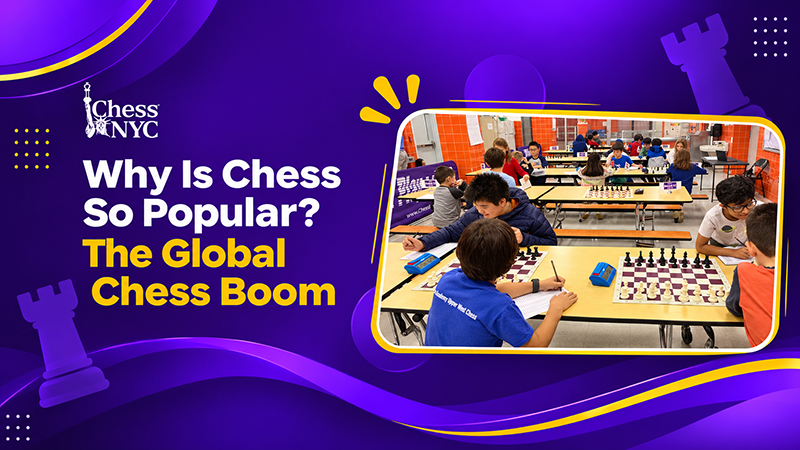
Chess has been played for centuries, yet its popularity has reached new heights in recent years. From online gaming platforms and international tournaments to schools, chess clubs and social media, the game is attracting millions of new players worldwide. Children, teenagers and adults are discovering the excitement of moving pieces across a chessboard, planning strategies and challenging their minds.
But what makes chess so popular? Why are people from different countries, age groups and backgrounds becoming interested in this centuries-old game?
The growing chess boom is not simply a passing trend. A combination of online accessibility, popular television shows, streaming platforms, competitive events and educational benefits has helped chess become a global phenomenon.
Let's explore why chess is growing in popularity and why more people are choosing to learn, play, and enjoy this timeless game.
1. The Queen's Gambit Effect: How a TV Show Changed Chess
One of the biggest reasons behind the recent growth of chess popularity was the success of Netflix's The Queen's Gambit.
Released in 2020, the series introduced audiences to Beth Harmon, a fictional chess prodigy who rises through the competitive chess world. Its engaging storytelling, intense tournament scenes and stylish presentation made chess exciting even for viewers who had never played the game before.
This phenomenon became widely known as the Queen's Gambit effect.
Following the show's success, interest in chess increased significantly. Many viewers started searching for chess rules, buying chessboards, downloading chess applications and watching professional matches.
The series also changed how people viewed chess. Instead of seeing it as a complicated game played only by experts, audiences began to see it as an entertaining activity anyone could learn.
Although the show was not the only reason for the chess boom, it played an important role in bringing chess into mainstream entertainment.
2. Online Chess Has Made Playing Easier Than Ever
Technology has completely changed how people discover and enjoy chess.
In the past, playing chess usually required a physical board and another person who knew the game. Today, anyone with a smartphone, tablet or computer can start playing within minutes.
Online chess platforms allow players to:
- Play against opponents from different countries.
- Challenge computer programmes at different skill levels.
- Participate in online tournaments.
- Solve daily chess puzzles.
- Analyse games and understand mistakes.
- Practise openings and improve strategic thinking.
Another important factor is convenience. Players no longer need to travel to a chess club or wait for an opponent. They can enjoy a quick game during a break, after school or in their free time.
Online accessibility has made chess more welcoming to beginners and introduced the game to a much wider audience.
3. Social Media and Chess Streaming Have Created New Fans
Social media has played a major role in making chess more entertaining and accessible.
Chess content is now popular across YouTube, Twitter, Instagram and other digital platforms. Professional players, coaches and content creators share tutorials, game analysis, tournament highlights and entertaining challenges.
These videos help beginners understand chess without feeling overwhelmed by complicated explanations.
Live streaming has also changed how audiences experience competitive chess. Viewers can watch professional players make decisions, understand their strategies and follow important matches in real time.
Chess creators often combine education with humour and entertainment, making the game enjoyable for people who may not have considered learning it before.
This new style of chess content has helped build an international community where beginners and experienced players can share their interest in the game.
4. Chess Is More Than a Game: Its Educational Benefits
Another major reason for the chess boom is the game's educational value.
Chess requires players to think carefully before making decisions. Every move creates new possibilities, and players must consider their opponent's plans while developing their own strategy.
Regular chess practice can help develop several valuable skills.
Critical Thinking
Players must evaluate different positions, compare possible moves and choose the most suitable option. This encourages logical thinking and thoughtful decision-making.
Concentration and Focus
A single careless move can change the direction of a game. Chess encourages players to pay attention, remain focused and carefully observe the board.
Problem-Solving Skills
Every chess position presents a challenge. Players learn to identify problems, consider different solutions and select the best available move.
Patience and Discipline
Chess teaches players that success often requires time and preparation. Waiting for the right opportunity and avoiding rushed decisions are important parts of the game.
Strategic Planning
Players must think beyond their immediate moves. Planning helps them understand how individual decisions can influence the overall position.
These benefits make chess an interesting learning activity for children, students and adults.
5. Chess Is Becoming Popular Among Children and Students
Chess is increasingly finding its place in educational environments, including schools, after-school programmes and learning centres.
Parents and educators recognise that chess provides children with an enjoyable way to practise thinking skills outside traditional classroom activities.
For young learners, chess introduces important concepts such as planning, responsibility, patience and decision-making.
It also teaches children how to handle both success and disappointment. Winning can build confidence, while losing offers a chance to review mistakes and learn something new.
Chess lessons can make this learning process more structured and enjoyable. With guidance from experienced instructors, children can gradually learn the rules, build basic strategies, and develop their playing skills.
Group activities and friendly tournaments also encourage communication, sportsmanship and positive interaction with other students.
As a result, chess is becoming more than an extracurricular hobby. It is an engaging educational activity that can support children's overall learning experience.
6. Professional Chess Tournaments Attract Global Attention
International chess tournaments have also contributed to the game's growing popularity.
Major competitions bring together talented players from different countries, creating exciting opportunities for fans to follow high-level chess.
Events such as the World Chess Championship and the Candidates Tournament attract attention from chess enthusiasts and the wider sporting community.
Professional players demonstrate impressive calculation, preparation and strategic understanding. Their performances inspire younger players to study the game and improve their own abilities.
Modern broadcasting has made these competitions easier to follow. Live commentary, computer analysis and expert explanations help audiences understand important moves and turning points.
As more people watch competitive chess, interest in learning and playing the game continues to grow.
7. Chess Is Affordable and Accessible to Almost Everyone
One of chess's most appealing features is its simplicity.
Unlike many sports and recreational activities, chess does not require expensive equipment, specialised clothing or a large playing area.
A basic chessboard and a set of pieces are enough to get started. Players can also enjoy free online games using their smartphones or computers.
The game suits different age groups and experience levels. A young child can learn how the pieces move, while an experienced adult can spend years studying advanced strategies and opening variations.
Chess also brings people together across language and cultural boundaries. Since the rules are recognised internationally, players can compete with opponents from almost anywhere in the world.
This accessibility is one of the strongest reasons why chess continues to attract new generations of players.
8. The Rise of Chess as a Social Activity
Chess is no longer limited to quiet rooms and formal competitions. It has become a social activity in many communities.
Chess clubs, school programmes, community events and local tournaments provide opportunities for people to meet others who share the same interest.
In cities such as New York, people can enjoy chess in schools, community centres, clubs, and public spaces.
Playing with other people feels different from playing against a computer. Players can discuss strategies, learn from each other's mistakes and develop friendships through regular games.
Chess clubs also provide an encouraging environment for beginners who want to improve their skills.
For many people, joining a chess community is not just about becoming a stronger player. It is also about enjoying the experience of learning and playing together.
9. Why Adults Are Returning to Chess
Although chess is often associated with childhood education, its popularity among adults is growing too.
Many adults are discovering chess as a mentally engaging hobby that offers a break from everyday routines.
Some enjoy playing casually with friends, while others want to improve their skills through structured coaching and competitive games.
Adult chess lessons offer a comfortable pace to learn, understand strategic concepts, and correct common mistakes.
Chess also offers a lifelong learning experience. There is always another opening to explore, a new tactical pattern to recognise or a different strategy to understand.
Whether someone is a complete beginner or returning to the game after several years, chess offers plenty of opportunities for personal improvement and enjoyment.
10. The Future of the Global Chess Boom
The global chess boom shows no signs of being simply a short-lived trend. Technology, educational programmes, professional competitions and online communities continue to introduce the game to new audiences.
Artificial intelligence and chess engines have also changed how players study and prepare. Modern tools can analyse positions, identify mistakes and suggest stronger moves.
However, technology has not replaced the human experience of chess. The excitement of competing against another person, finding a clever combination or winning a difficult game remains an important part of its appeal.
In the coming years, chess is likely to become even more accessible through digital learning, online tournaments, school programmes and community-based activities.
As more people discover its educational and recreational value, chess will continue to connect players across generations and geographical boundaries.
How Can Beginners Become Better at Chess?
The best way to start learning chess is to build a strong foundation and practise regularly.
Here are a few simple suggestions for beginners:
- Learn the rules: Understand how each piece moves, how check and checkmate work, and the game's basic rules.
- Practise regularly: Play short games to become familiar with different positions.
- Solve chess puzzles: Develop your ability to recognise tactics and identify opportunities.
- Study basic openings: Learn the importance of controlling the centre and developing your pieces.
- Review your games: Understand your mistakes and think about how you could improve.
- Take chess lessons: Learn from experienced coaches who can explain strategies and guide your progress.
Consistent practice, curiosity and patience can make learning chess a rewarding experience.
Conclusion
So, why is chess so popular?
The answer lies in its unique combination of simplicity, challenge, entertainment and educational value. The Queen's Gambit effect introduced the game to new audiences, online platforms made it easier to play, and social media helped create a global chess community.
At the same time, parents, educators and adults continue to recognise the value of chess as an activity that encourages strategic thinking, concentration, patience and problem-solving.
The global chess boom reminds us that some games never lose their appeal. Whether played online, at school, in a chess club or at home, chess continues to bring people together through learning, competition and creativity.
If you're interested in discovering the game, there's never been a better time to pick up a chessboard and make the first move.
Frequently Asked Questions (FAQs)
1. Why is Chess NYC a good option for learning chess?
Chess NYC offers chess classes, private coaching, after-school programmes, camps, tournaments and online lessons for different age groups and skill levels. Its programmes help students develop strategic thinking, concentration, problem-solving and confidence while making learning chess enjoyable and engaging.
2. What caused the global chess boom?
Several factors have influenced the global chess boom, including the success of The Queen's Gambit, online chess platforms, social media creators, professional tournaments, and the growing recognition of chess as an educational activity.
3. What is the Queen's Gambit effect?
The Queen's Gambit effect refers to the significant increase in public interest in chess following the release of Netflix's series The Queen's Gambit in 2020. The show encouraged many viewers to explore chess, purchase chessboards, and start playing online.
4. Is chess good for children and adults?
Yes, chess is an engaging activity for both children and adults. It encourages concentration, logical reasoning, strategic planning, patience and problem-solving. It also provides opportunities for social interaction and continuous learning.
5. How can beginners improve their chess skills?
Beginners can improve by learning the rules, playing regularly, solving chess puzzles, studying basic strategies and reviewing their games. Taking structured chess lessons from experienced coaches can also help players understand the game more effectively and develop their skills.