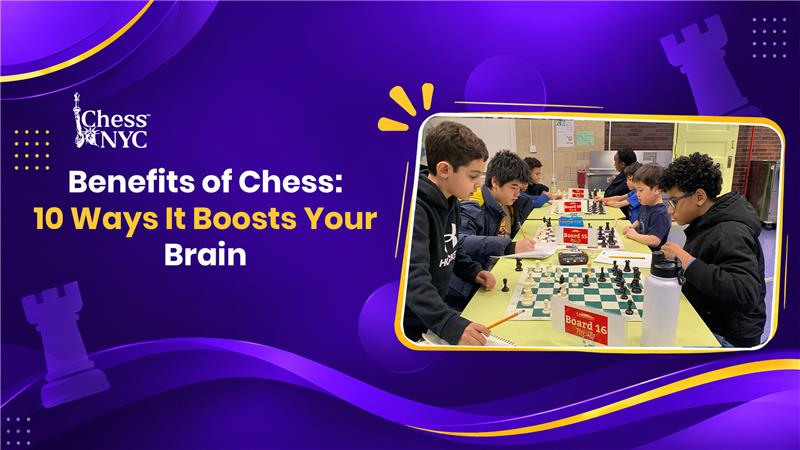
Chess is not just a game of moves and strategies; it is an opportunity to challenge your mind and develop valuable life skills. Every game encourages players to think ahead, recognise patterns, solve problems, and make thoughtful decisions. Whether you are introducing a child to chess, helping a student develop stronger thinking habits, or exploring a new hobby as an adult, chess offers an engaging learning experience for people of all ages.
But does chess make you smarter? Although playing chess does not guarantee a higher IQ, it gives your brain regular opportunities to practise memory, concentration, creativity, and logical reasoning. Each move presents a new challenge that encourages players to analyse situations and consider different possibilities.
The link between chess and brain health makes the game especially appealing for people who want to keep learning and stay mentally active. From improving memory to developing patience and confidence, chess combines entertainment with meaningful mental exercise.
Let's explore 10 ways chess can strengthen important thinking skills and why making it part of your routine can be a rewarding experience.
10 Benefits of Chess That Help Boost Your Brain
1. Chess Improves Memory
One of the most recognised mental benefits of chess is its ability to exercise memory.
During a game, players need to remember different moves, recognise familiar positions, and consider possible combinations. They also learn to recall opening strategies, tactical patterns, and lessons from previous games.
Over time, this regular mental exercise gives players opportunities to practise both short-term and long-term memory skills.
For example, a beginner might initially struggle to remember how different chess pieces move. With practice, these movements become easier to recall, allowing the player to focus on more advanced strategies.
This is one reason why people often say chess improves memory. The game encourages players to remember information and apply it when making decisions.
2. Chess Develops Critical Thinking Skills
Chess encourages players to think carefully before making a move.
Every decision requires players to examine the current position, identify possible threats, and consider different outcomes. Instead of choosing the first available option, they learn to evaluate alternatives.
This process develops critical thinking, which is useful far beyond the chessboard.
For children, these skills can support classroom learning and help them approach academic challenges more thoughtfully. Adults can also benefit by practising careful analysis and making decisions based on the information available.
Whether planning a chess strategy or solving a difficult everyday problem, critical thinking is an important skill.
3. Chess Strengthens Concentration and Focus
A single careless move can change the direction of an entire chess game.
Players must pay attention to their opponent's moves, protect important pieces, and stay aware of possible threats. Losing concentration, even briefly, can lead to mistakes.
Regular chess practice encourages players to remain focused for longer periods.
For children, this provides an opportunity to practise paying attention to one activity without constantly switching between distractions.
Adults can also enjoy the mental challenge of concentrating on a game that requires patience and careful observation.
With consistent practice, chess becomes a useful way to exercise attention and mental discipline.
4. Chess Encourages Better Problem-Solving Abilities
Every chess position presents a problem that needs a solution.
A player might need to escape check, protect a valuable piece, find a winning combination, or prevent an opponent from gaining an advantage.
Finding the best response requires creativity, logical reasoning, and the ability to compare different possibilities.
These problem-solving habits can also be applied to everyday situations.
Children learn that difficult challenges can often be approached step by step. Adults practise analysing situations and considering different solutions before taking action.
Chess teaches an important lesson: instead of reacting immediately, take a moment to understand the problem and explore your options.
5. Chess Improves Planning and Strategic Thinking
Successful chess players rarely think about only their next move.
They consider what might happen several moves ahead and prepare strategies to achieve their goals.
For example, a player might develop pieces early, control the centre of the board, and prepare an attack for later in the game.
This approach encourages long-term planning rather than focusing only on immediate results.
Strategic thinking is valuable in many areas of life, including education, professional development, and personal decision-making.
By playing chess, people get regular opportunities to practise setting goals, planning actions, and adjusting their strategies when circumstances change.
6. Chess Teaches Patience and Self-Control
Chess is not a game where rushing usually leads to success.
Players need time to examine the board, evaluate possible moves, and consider their opponent's plans. Making decisions too quickly can result in avoidable mistakes.
This teaches patience and self-control.
Children especially benefit from learning to pause, think, and make thoughtful decisions. They also begin to understand that improvement takes time and that mistakes are part of learning.
For adults, chess offers an opportunity to slow down and focus on a challenging activity without rushing through every decision.
The ability to remain patient under pressure is a valuable skill both inside and outside the game.
7. Chess Builds Creativity
Although chess follows specific rules, the number of possible positions and strategies creates endless opportunities for creative thinking.
Players often need to discover unexpected moves, develop original plans, and find solutions to complicated situations.
For example, a surprising sacrifice might open an attacking opportunity that was not immediately obvious.
This encourages players to look beyond the most obvious choices.
Chess combines logical thinking with imagination, making it an engaging activity for people who enjoy exploring different approaches to a challenge.
For young learners, this can make problem-solving more exciting and interactive.
8. Chess Supports Decision-Making Skills
Every move in chess involves a decision.
Players must evaluate risks, compare opportunities, and choose an action without knowing exactly what their opponent will do next.
Sometimes a player needs to make a safe move. At other times, taking a calculated risk may create a better opportunity.
These experiences help players understand that decisions have consequences.
Chess also teaches players to take responsibility for their choices. If a move leads to a disadvantage, they can review what happened and learn from the experience.
This process encourages thoughtful decision-making and helps develop confidence over time.
9. Chess Encourages Emotional Resilience
Winning feels rewarding, but losing is also an important part of learning chess.
A player may lose because of a small mistake, an unexpected strategy, or a missed opportunity. Instead of giving up, they can review the game and identify areas for improvement.
This helps develop emotional resilience.
Children learn that one setback does not define their abilities. Adults can also practise handling frustration, accepting mistakes, and approaching challenges with a positive attitude.
Chess teaches that progress comes through patience, effort, and consistent practice.
Learning how to respond positively to both success and failure is an important life skill.
10. Chess Supports Lifelong Brain Engagement
One of the best things about chess is that people can enjoy it throughout their lives.
Children can learn the basics, teenagers can explore advanced strategies, and adults can continue developing their skills through regular practice.
The game constantly introduces new challenges. Even experienced players encounter unfamiliar positions that require fresh thinking.
This ongoing mental engagement makes chess an enjoyable way to keep the mind active.
Discussions about chess and brain health often highlight the importance of activities that challenge memory, reasoning, attention, and learning.
Chess can be part of a mentally active lifestyle, alongside reading, physical activity, social interaction, and other healthy habits.
However, chess should not be considered a medical treatment or a guaranteed way to prevent cognitive decline.
Does Chess Make You Smarter?
This is one of the most common questions among parents, students, and adults who are interested in learning the game.
The answer is that chess can help develop specific thinking skills, but it does not automatically make everyone smarter or guarantee an increase in IQ.
Playing chess regularly gives the brain opportunities to practise:
- Logical reasoning and analytical thinking.
- Memory and pattern recognition.
- Concentration and attention.
- Planning and decision-making.
- Problem-solving and creative thinking.
- Patience and self-control.
The benefits depend on several factors, including how frequently someone plays, how they practise, and how actively they engage with the game.
For children, structured chess lessons can make learning more organised and enjoyable. Adults can also improve their understanding through guided instruction, practice games, and reviewing their mistakes.
The biggest advantage is that chess makes mental exercise enjoyable rather than repetitive.
Chess and Brain Health: Why Mental Exercise Matters
The brain benefits from activities that challenge people to learn, remember, analyse, and adapt.
Chess brings several of these activities together in one game.
When players study a position, they need to recognise patterns, evaluate possible moves, and think about future consequences. These mental tasks engage different cognitive processes.
Chess also provides opportunities for continuous learning. Beginners gradually understand the rules, intermediate players develop strategies, and advanced players explore complicated combinations.
This makes chess an engaging activity for people who enjoy challenging themselves.
For better overall brain health, chess can complement other healthy habits, such as:
- Getting enough quality sleep.
- Staying physically active.
- Eating a balanced diet.
- Maintaining social connections.
- Reading and learning new skills.
- Managing everyday stress.
Chess is not a replacement for these habits, but it can be a meaningful addition to an active lifestyle.
Why Children Should Learn Chess at an Early Age
Chess can be especially rewarding for children because it introduces important thinking skills through play.
Rather than simply memorising information, children actively solve problems and make decisions.
Here are some reasons parents consider chess an excellent learning activity:
Better classroom thinking: Chess gives children opportunities to practise logical reasoning and structured problem-solving.
Improved attention: Following a game encourages children to pay attention to details and remain engaged.
Confidence building: Learning new strategies and completing challenging games can help children feel more confident.
Learning from mistakes: Chess teaches children to review their decisions and try different approaches.
Social development: Playing with classmates and teammates encourages communication, sportsmanship, and respectful competition.
With supportive coaching and age-appropriate lessons, chess can be both educational and enjoyable.
How Adults Can Benefit from Playing Chess
Chess is not just for children or competitive players. Adults can enjoy the game at any skill level.
Learning chess can provide a refreshing mental challenge after a busy day. It offers an opportunity to step away from everyday routines and focus on something engaging.
Adults can use chess to practise strategic thinking, improve their understanding of complex situations, and connect with other players.
Whether you are a complete beginner or returning to chess after several years, there is always something new to learn.
You do not need to become a professional player to enjoy its benefits. Playing regularly, reviewing games, and learning new strategies can make the experience rewarding.
How to Get Started with Chess
If you want to experience the benefits of chess, starting is easier than you might think.
Here are five simple steps:
- Learn the basics: Understand how each chess piece moves and learn the basic rules.
- Practise regularly: Play short games to become familiar with different positions.
- Study simple strategies: Learn about controlling the centre, developing pieces, and protecting your king.
- Review your games: Identify mistakes and understand how you could improve.
- Learn from experienced coaches: Structured instruction can help you build a strong foundation and progress more confidently.
Consistency is more important than trying to master everything at once.
Looking for Chess Classes Near Me?
If you want to improve your chess skills, structured lessons can make learning easier and more enjoyable.
When searching for chess classes near me, look for programmes that offer experienced coaches, engaging lessons, and opportunities to practise with other players.
A good chess learning environment should support beginners while also challenging students who want to advance their skills.
Chess NYC offers chess classes, private coaching, after-school programmes, camps, tournaments, and online lessons for different ages and skill levels.
Its educational programmes focus on making chess enjoyable while helping students develop strategic thinking, concentration, problem-solving, and confidence.
Whether you are introducing your child to chess or looking to improve your own game, learning with experienced coaches can help you build skills step by step.
Conclusion: Make Chess Part of Your Learning Journey
Chess is much more than a competitive board game. It is an engaging activity that encourages memory, concentration, logical reasoning, creativity, and strategic thinking.
From helping children practise problem-solving to giving adults an enjoyable mental challenge, chess offers something valuable for people at every stage of life.
Although it cannot guarantee higher intelligence or prevent cognitive decline, regular chess practice provides meaningful opportunities to exercise the mind and develop useful thinking habits.
The best way to experience these benefits is to start playing, keep learning, and enjoy the process of improving one move at a time.
Frequently Asked Questions (FAQs)
1. Does chess make you smarter?
Chess can help develop specific cognitive skills, including memory, logical reasoning, concentration, planning, and problem-solving. However, playing chess does not automatically increase IQ. Its value comes from regularly practising different types of mental challenges.
2. How does chess improve memory?
Chess encourages players to remember piece movements, recognise board patterns, recall strategies, and analyse previous games. These activities provide regular opportunities to practise memory and information recall.
3. Is chess good for brain health?
Chess is an engaging mental activity that exercises attention, reasoning, memory, and decision-making. It can complement a healthy lifestyle, although it is not a medical treatment or a proven way to prevent brain-related conditions.
4. At what age should children start learning chess?
Children can begin learning basic chess concepts at around four to six years old, depending on their interest and development. Simple lessons, interactive activities, and supportive coaching can make learning enjoyable for young beginners.